Day in the Life: Understanding LNER's Frontline
A strategic research initiative that shadowed 6 frontline roles across station and onboard operations, surfacing 83 pains and gains that directly informed cross-departmental roadmaps and product decisions. Nominated for two industry awards.
LNER Knew Its Customers. It Barely Knew Its Own People.
Staff and customer interactions have the biggest positive and negative impact on satisfaction metrics at LNER. Yet the organisation's focus had historically been almost entirely on the customer side. Little had been done to understand or address the experience of frontline colleagues: the people at stations and onboard who shaped every customer interaction.
The result was low colleague engagement, operational inefficiencies, and inconsistent customer experiences at the moments that mattered most. A new set of organisational objectives created an opening to change this: and I was asked to lead it.
"We don't have anything written down about what we actually do or what makes the job hard. Nobody's ever asked."
The challenge: Systematically capture the lived experience of 6 distinct frontline roles, identify where the organisation was already addressing problems and where it wasn't, and produce something actionable enough to directly shape roadmaps across multiple departments.
Research & Discovery
Before any research began, I hosted a workshop with frontline CX staff, their managers, and senior leadership to align on objectives and agree the scope. We identified 6 frontline roles to focus on: a mix of customer-facing and people manager roles, across both station and onboard environments. The workshop also surfaced something immediately useful: there was almost no written documentation on what these roles actually involved day to day.
With objectives and buy-in secured, I defined the research approach alongside a junior researcher who supported fieldwork execution throughout.
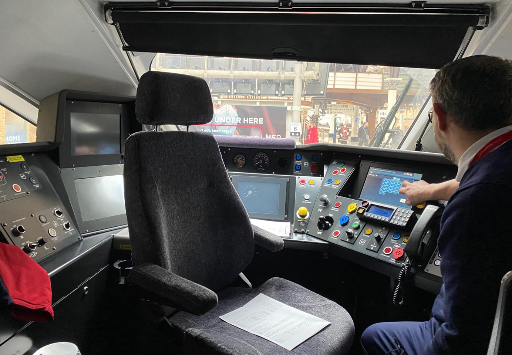
Surveys (56 responses)
A survey gave us a high-level picture of each role's macro tasks, time allocation, and attitudes. This wasn't the primary source of insight: it was used to build working hypotheses and identify the areas of focus to prioritise in the shadowing sessions that followed.
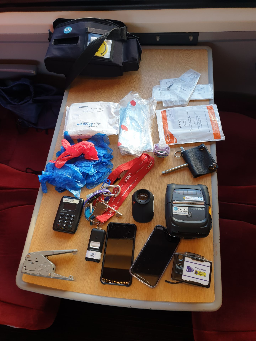
Shadowing (6 sessions)
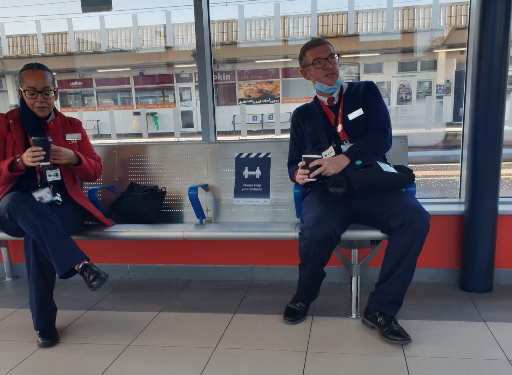
One full shift per role, using a think-aloud methodology with intro and outro interviews. This was where the richest data came from. Following someone through a real shift: not a workshop simulation: surfaced friction, workarounds, and moments of pride that no survey could capture. Each session was validated with the individual's line manager to confirm accuracy and add operational context.
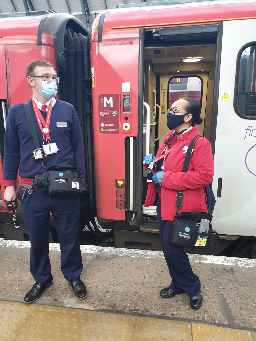
Workshops
Group sessions with colleagues of each shadowed individual. Used to surface anything the one-to-one shadowing missed, identify nuances in how the same role was experienced differently by different people, and pressure-test emerging findings before synthesis.\
From Data to Strategic Asset
The research produced a significant volume of qualitative and quantitative data across 6 roles. The strategic challenge was turning it into something that could actually drive decisions across departments with different priorities and timelines.
Synthesis & Affinity Mapping
Working with the project team, I affinity mapped all data to distinguish individual, role-specific pains and gains from collective ones shared across roles. This distinction mattered: collective pains pointed to systemic issues, while role-specific ones pointed to targeted interventions.
Journey Maps
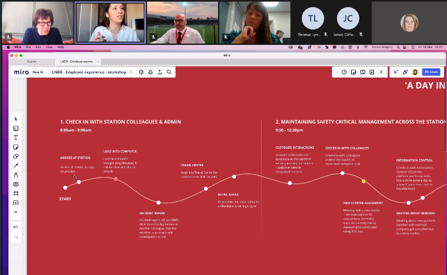
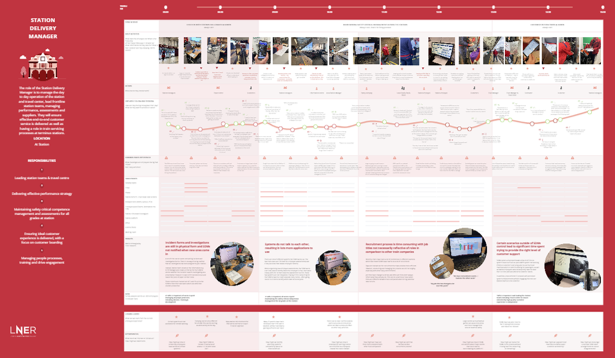
I formatted the synthesised insights into journey maps in Miro, structured to be useful at multiple levels of zoom: high-level themes for senior stakeholders, granular detail for teams designing specific solutions. Each map captured the role's activities, the agents and systems involved, and the specific pitfalls and opportunities at each stage.
Prioritisation Framework
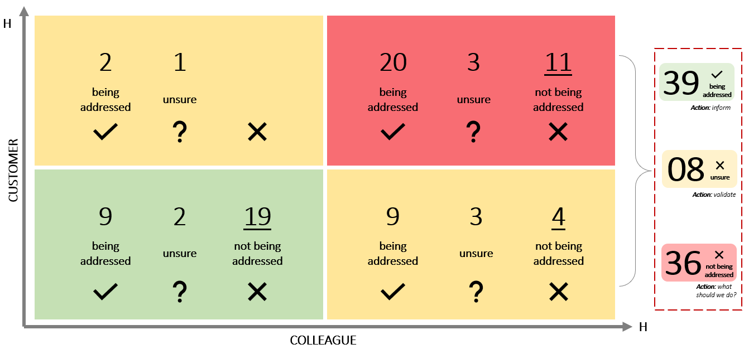
I hosted a cross-departmental workshop to group the 83 pains and gains into three categories: already being addressed by an existing initiative, partially addressed and needing refinement, and not being addressed by anyone in the business. This framing made the output immediately actionable: each bucket had a clear next step rather than leaving departments to figure out what to do with a list of findings.
From Insight to Intervention
The DILO work wasn't a self-contained project: it was a foundation for action across the business. Three workstreams emerged directly from the findings.
Muster Points
One of the most significant pain clusters identified was around crew assignment during disruption: a process that was manual, slow, and required too many people. This became the Muster Points initiative, redesigning how LNER staffed trains during disruption. The results from the Leeds trial: steps to assign crew reduced from 20 to 5, employees needed from 4 to 1, and lead time from 6 to 4 minutes.
Booking On & ERP
The research also fed directly into a redesign of the staff booking-on process and an Enterprise Resource Planning implementation: both driven by pains surfaced in the DILO work and progressed in collaboration with the relevant departments.
Validation & Iteration
Findings were validated at multiple stages rather than in a single review at the end. After each shadowing session, line manager SME validation confirmed accuracy and added operational nuance. The group workshops checked individual findings against collective experience. The cross-departmental prioritisation workshop tested whether the framing and categories resonated with the people who would act on them.
The journey maps were designed to support ongoing validation: their multi-level structure meant teams could return to them as they progressed initiatives, using the underlying detail to sense-check design decisions against the original research.
Results & Impact
The DILO work produced both immediate research outputs and downstream product impact through the initiatives it informed:
Captured across 6 frontline roles: the first time LNER had systematically documented the frontline experience at this level of detail.
Result of the Muster Points initiative, one of three workstreams that came directly from DILO findings.
Crew assignment during disruption reduced from a 4-person to a 1-person operation in the Leeds trial.
Nominated for Employee at the Heart of Everything and Employee Driven CX: the first time LNER had been a finalist for design work.
"This is the first time anyone has actually followed us through a shift and tried to understand what it's really like. It felt like the business finally cared."
- Frontline colleague, post-research feedback
What I Learned
Applying the same rigour to internal audiences as external ones surfaced insights that surveys and anecdotal feedback had missed for years.
The three-bucket prioritisation framework was what turned 83 findings into something departments could act on immediately, rather than a report that sat unread.
The most significant operational pain points: the ones that led to Muster Points: only surfaced during in-person observation. Nobody had flagged them in surveys because they'd normalised them.
The journey maps worked because they could be read at different levels of detail by different audiences. A single artefact that speaks to both senior leadership and delivery teams is worth the extra design effort.
The award nominations reflected something beyond the findings: the act of systematically listening to frontline staff shifted how the organisation saw the design practice's role.
What I'd Do Differently
More shadowing sessions per role: one shift per role was enough to generate findings but limited the diversity of scenarios captured. A second session on a different shift pattern would have added depth.
Earlier cross-departmental involvement: bringing department leads in during the research phase rather than just the synthesis workshop would have accelerated buy-in and reduced the time from findings to action.