LNER Door to Door: Solving the Last Mile
Designed a multi-modal travel proposition that tackled rail's biggest perception problem: inconvenience: by connecting passengers with taxis, buses, and micro-mobility for the journeys before and after the train.
Rail's Inconvenience Problem Was a Perception Problem
One of the most persistent barriers to rail travel is the belief that driving or flying is simply more convenient. But this perception doesn't hold up under scrutiny. A flight requires getting to an airport, clearing security, and then reaching the final destination from the arrival airport. The comparison isn't door to door: it's platform to platform.
The real problem was that rail hadn't made its own door-to-door story easy to tell. Passengers bought a ticket and were largely left to figure out the rest themselves. Research consistently showed that the "last mile": the journey from the destination station to wherever they were actually going: was the biggest source of uncertainty, particularly for unfamiliar destinations.
The specific insight that shaped everything
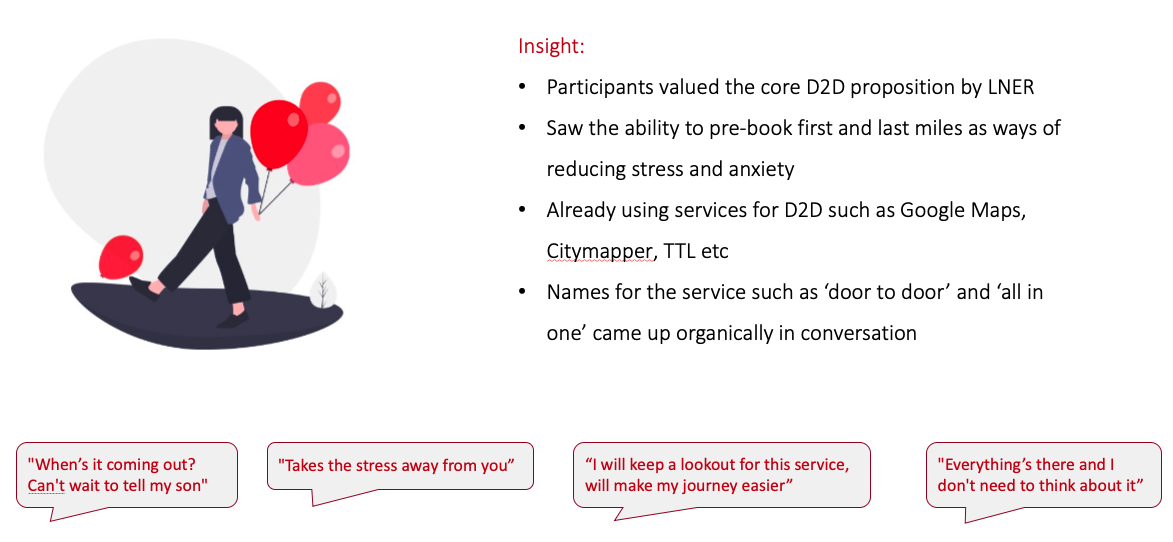
Prior segmentation and persona research had identified a group of passengers most open to multi-modal services. What was missing was an understanding of when and how to reach them. Through a new survey and 5 targeted interviews with passengers from that segment, a clear pattern emerged: passengers bought tickets weeks or months in advance but only started thinking about the full journey in the days immediately before travel. That's when anxiety about logistics was highest, and that's when they were most receptive to help.
"I bought my ticket to Edinburgh in January. I only started thinking about how I'd actually get to the hotel last night."
"I'd just use Uber but what if the train is late? I don't want to be stuck paying for a cab that left without me."
The delay concern was significant. With roughly 15% of services incurring some form of delay, the idea of pre-booking onward transport felt genuinely risky to passengers: and that risk was suppressing what would otherwise have been a receptive audience.
Research & Discovery
Research for this project combined existing internal data with new primary work designed to answer two specific questions: when are passengers most receptive, and what's stopping them from booking multi-modal travel?
Existing Research & Cross-Industry Analysis
I reviewed LNER's existing segmentation and persona work alongside upsell and cross-sell patterns from other industries. A consistent finding across retail, travel, and hospitality was that time-sensitive, contextually relevant messaging in the final days before a purchase or event drove significantly higher conversion than earlier communications. Applied to rail: the 3 days before travel were the window to target.
New Survey & Interviews
I designed a survey targeting passengers identified in prior research as most open to multi-modal services, and ran 5 in-depth interviews with the same group. The research confirmed the 3-day window as the right moment to reach people. It also surfaced the delay anxiety clearly enough that addressing it wasn't optional: it had to be built into the proposition itself. A follow-up survey after launch measured the delta and validated the approach.
Route Selection Insight
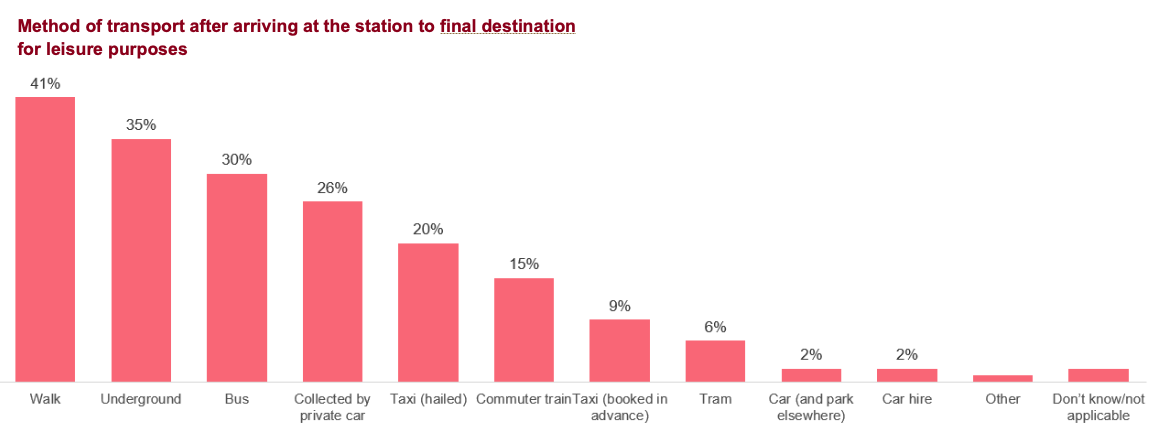
Research also shaped which routes to run the POC on. The last-mile opportunity was strongest on long-distance journeys to destinations where passengers were unfamiliar with local transport options. London departures were deprioritised: the sheer density of transport options in the capital meant passengers already had solutions. Edinburgh, York, and Durham were the sweet spots: destinations far enough from home that passengers genuinely didn't know whether to take a local bus, find a taxi rank, or look for a bike hire scheme.
Strategy & Design Principles
Three decisions shaped the entire product strategy: each one driven directly by research findings.
Out of the Booking Engine, Into the Countdown
The instinct was to integrate multi-modal booking into the core ticket purchase flow. Research ruled this out: passengers buying a ticket 3 months in advance had no interest in planning the last mile at that moment, and adding friction to the booking engine risked damaging LNER's core conversion. Instead, the right channel was marketing communications in the 3-day countdown to travel: contextually relevant, timely, and completely separate from the booking flow.
The LNER Promise
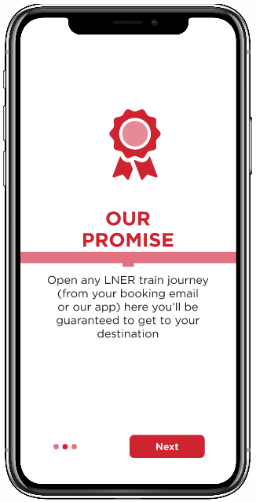
The delay anxiety finding was too significant to design around: it had to be addressed directly. I designed the LNER Promise: if a passenger pre-booked onward transport through the service and their train was delayed, LNER would reimburse any costs they couldn't recover. The Promise didn't solve the operational complexity of automatically rebooking transport in a POC context, but it removed the financial risk that was the real barrier. In research, it consistently shifted the conversation from "I'd never pre-book" to "actually, that's fine."
Aggregated Transport, Not Just Taxis
The supplier integration covered taxis, local buses, and micro-mobility options: not just ride-hailing. This was important for the proposition to feel genuinely useful rather than a rebranded Uber referral. Passengers in Edinburgh or York could find whatever was most appropriate for their specific destination and preference, not just the nearest cab.
Design & Prototyping
The Countdown Email Sequence
I designed the full 3-day countdown communications: messaging, layout, and the Promise framing across 2 to 3 emails. The core challenge was explaining a new concept and addressing delay anxiety entirely within marketing emails, before a passenger had opened the app.
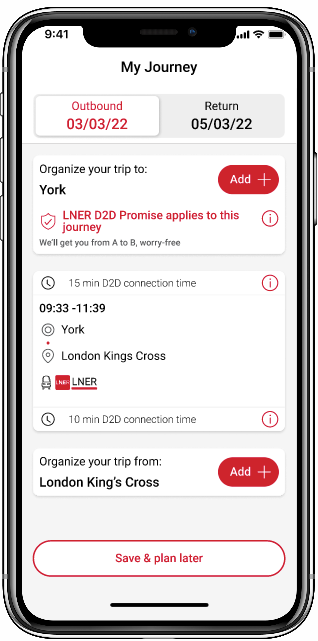
Home Screen & The Promise
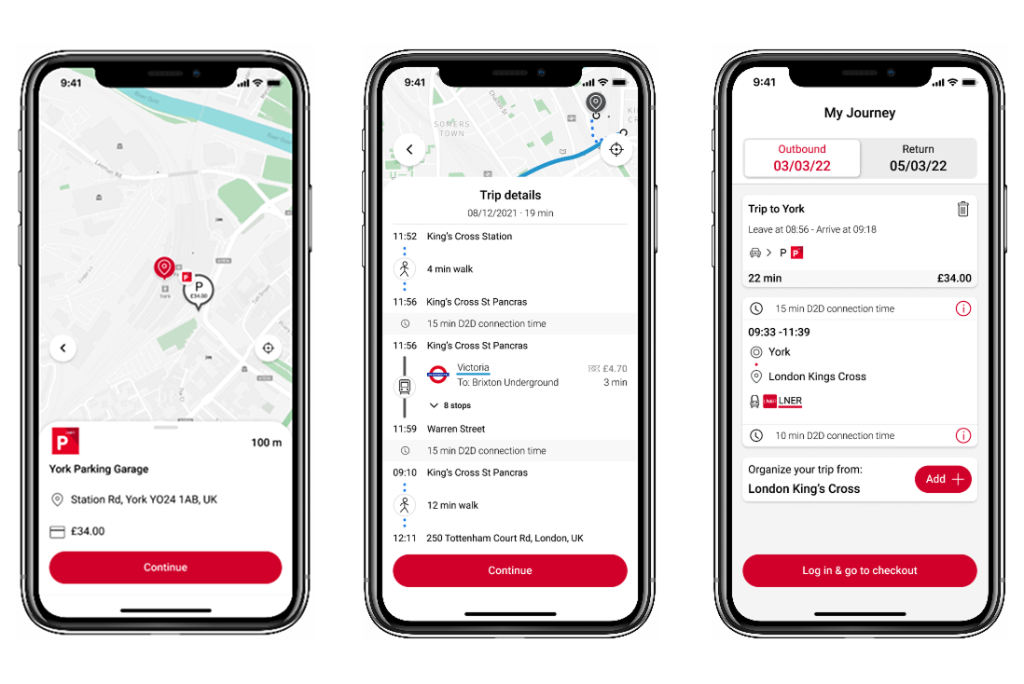
The home screen and Promise integration were the areas I led most directly with the supplier's designer. The home screen needed to orient a first-time user immediately, connecting their specific train journey to available transport at their destination. The Promise had to be visible and credible without overwhelming the primary booking action.
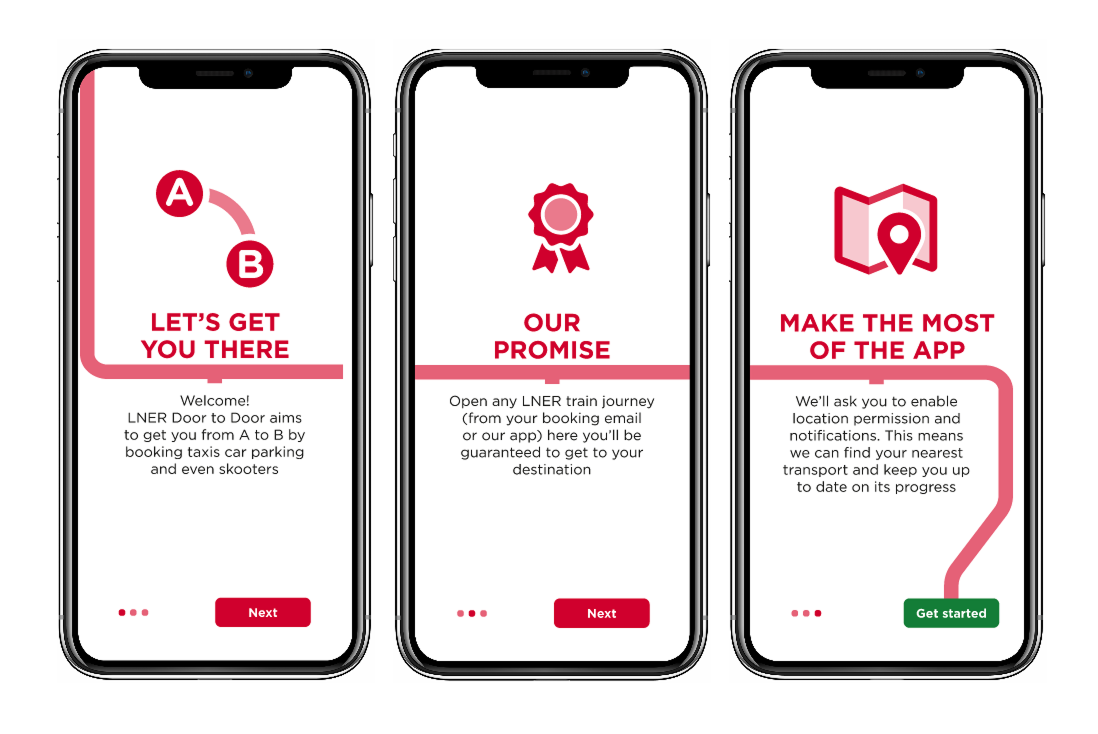
Onboarding Flow
Because this was a standalone app rather than a native integration, onboarding carried more weight than usual. It had to resolve any remaining questions the emails hadn't answered and build enough confidence for a first booking. I worked collaboratively with the supplier's designer through rapid iterations on the key screens.
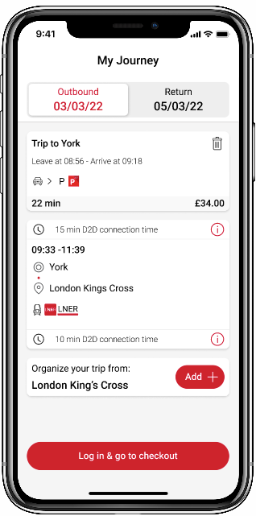
Booking Flow & Localisation
The core booking flow was largely white-label from the supplier, covering around 90% of the in-app experience. My role here was localisation: ensuring LNER brand, tone, and the Promise were woven consistently through screens the supplier's developer primarily built and maintained.
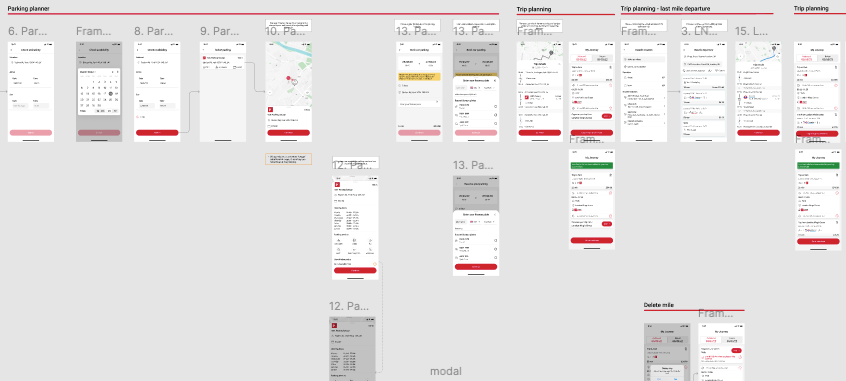
Working with the Supplier's UI Designer
The supplier had a dedicated UI designer I worked with across two distinct tracks. For new and LNER-specific screens (the home screen, Promise integration, onboarding), we followed a structured collaborative process: a kickoff session to align on direction, then an async phase where we each independently sketched ideas using Crazy 8s, followed by a sync session where we presented our favourite concepts to each other, identified the strongest elements from both, and converged on a final direction together. For existing white-label screens, the work was primarily localisation: adapting layouts, copy, and visual treatment to fit the LNER brand without rebuilding what didn't need rebuilding.
Validation & Iteration
The POC ran for 3 months on London to Edinburgh, York, and Durham services. A follow-up survey measured satisfaction delta against the pre-launch baseline.
Overall CSAT: 7.6 to 8.4
CSAT on delayed journeys: 4.3 to 5.4
The delayed journey figures were the most significant finding. Passengers whose trains were delayed and who used the service: benefiting from the Promise: still rated their experience over a full point higher than the baseline for delayed journeys without the service. The Promise hadn't just removed a barrier to adoption; it was actively recovering satisfaction in the worst-case scenario.
What the data confirmed about the two-app problem
88% of bookings were last-mile (destination end) rather than first-mile (departure end), which validated the route selection and the research insight about unfamiliar destinations. The conversion rate of 3.4% across the eligible services was constrained by the standalone app requirement: a full integration into the LNER app would have removed the single biggest drop-off point in the funnel.
Results & Impact
Results from the 3-month POC across Edinburgh, York, and Durham services:
Booked through the service across the POC period, with 88% at the destination end of the journey.
Up from 7.6 before launch — a meaningful uplift in satisfaction across all Door to Door users.
Up from 4.3 on delayed journeys without the service. The LNER Promise turned the worst-case scenario into a trust-building moment.
Achieved despite the standalone app constraint: a strong signal for what full integration could deliver.
"I was nervous about the train being late and losing the taxi. Knowing LNER would cover it made me actually go ahead and book."
- Passenger feedback, post-POC survey
What I Learned
The 3-day countdown insight changed the entire channel strategy. Reaching people at the right moment mattered more than the quality of the message at the wrong one.
Passengers weren't reluctant because the product was unclear. They were reluctant because of financial risk from delays. The Promise solved the actual problem.
Last-mile at unfamiliar destinations was the real opportunity. Designing for London would have been designing for the wrong user in the wrong moment.
The standalone app was the single biggest friction point. A shoestring POC proved the concept; the results would have been stronger with native integration.
The CSAT uplift on delayed journeys was the most surprising result. A delay handled well outperformed an on-time journey without the service.
What I'd Do Differently
Push harder for native integration: the two-app problem was foreseeable and the conversion data now makes the business case for integration more clearly than any pre-launch projection could have.
Test the Promise messaging earlier: I designed it based on research but only validated it in the live POC. Earlier prototype testing of the Promise wording would have let us optimise the framing before launch.